Midterms or payrolls: which one moves bitcoin this week
Markets already see a 70% chance of a Democratic sweep. The bigger surprise risk is Friday's jobs report, which decides the Fed's December hike.

Also in: Русский
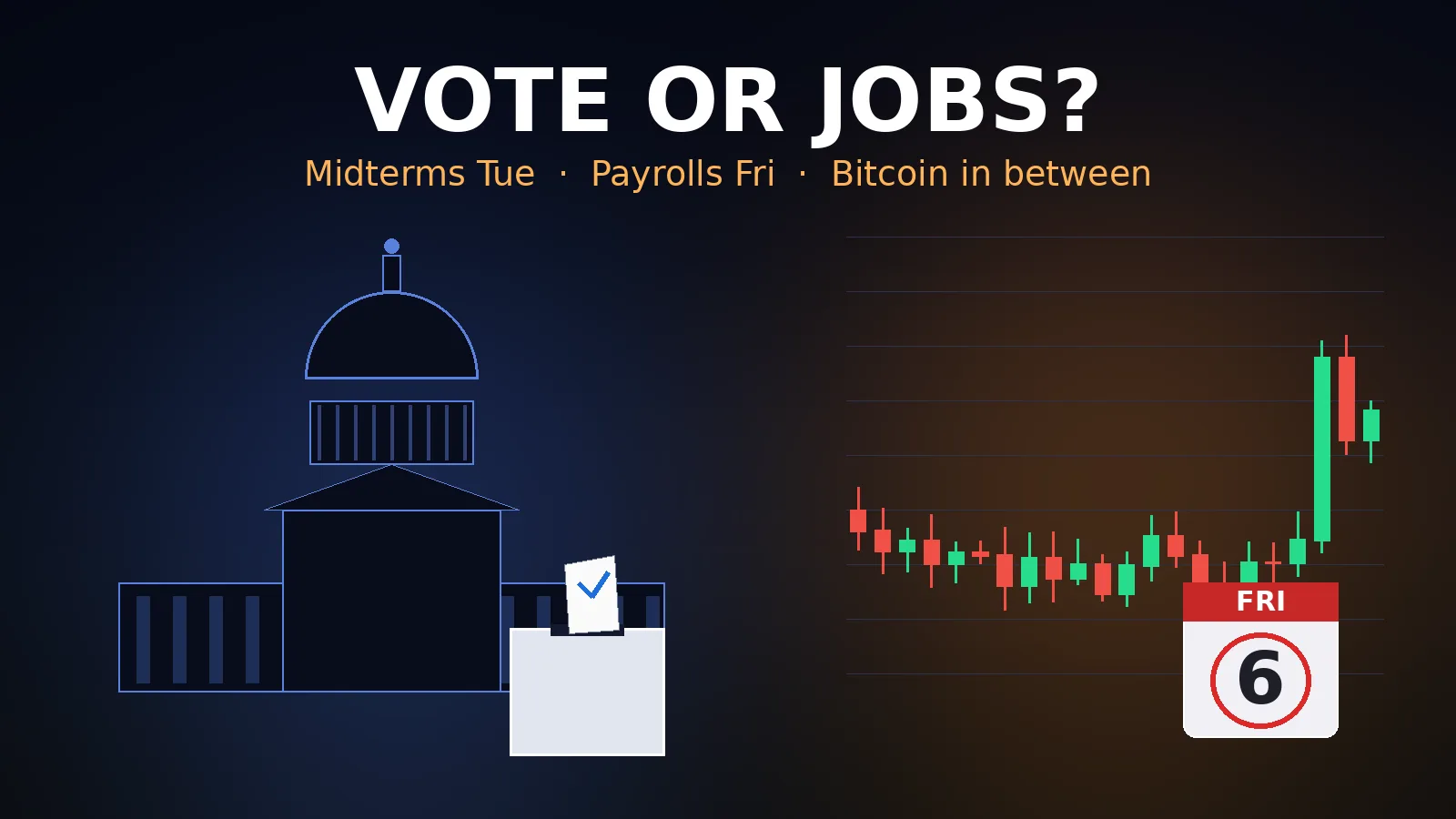
Crypto PACs have put close to $170 million into the US midterms, most of it behind Republicans (CoinDesk). Kalshi traders, meanwhile, give Democrats about a 70% chance of taking both chambers. Voting is tomorrow, November 3. It looks like the event of the week. For price, I don't think it is.
What the vote actually decides
The prize is the CLARITY Act, the federal rulebook for bitcoin and other digital assets. The House passed its version back in July 2025, 294 to 134. In the Senate it stalled on a 49–50 cloture vote on September 15 (Bitcoin Magazine). Democrats want ethics language barring senior officials, the president included, from profiting off crypto ventures. Republicans won't accept it. Stablecoin yield is a separate fight.
TD Cowen's Jaret Seiberg calls a Democratic sweep the worst case for crypto: the bill could sit frozen for two years. Worst case, not doomsday. Seiberg expects Trump to stay friendly and veto hostile bills, while regulators keep writing rules on tokenization, perpetual futures and stablecoins.
Here's the part a trader should care about. The worst case is also the most likely one. The market can read the same 70% you can. If Democrats win, price learns nothing new. The surprise would be Republicans holding on: as of October 27, Kalshi gave them 10% to keep the House and 35% for the Senate (Bitcoin Magazine).
Why Friday matters more
On Friday, November 6, the US October jobs report comes out. Consensus is roughly 65,000 new jobs after a weak 29,000 in September, with unemployment at 4.2% (CoinGape, KuCoin).
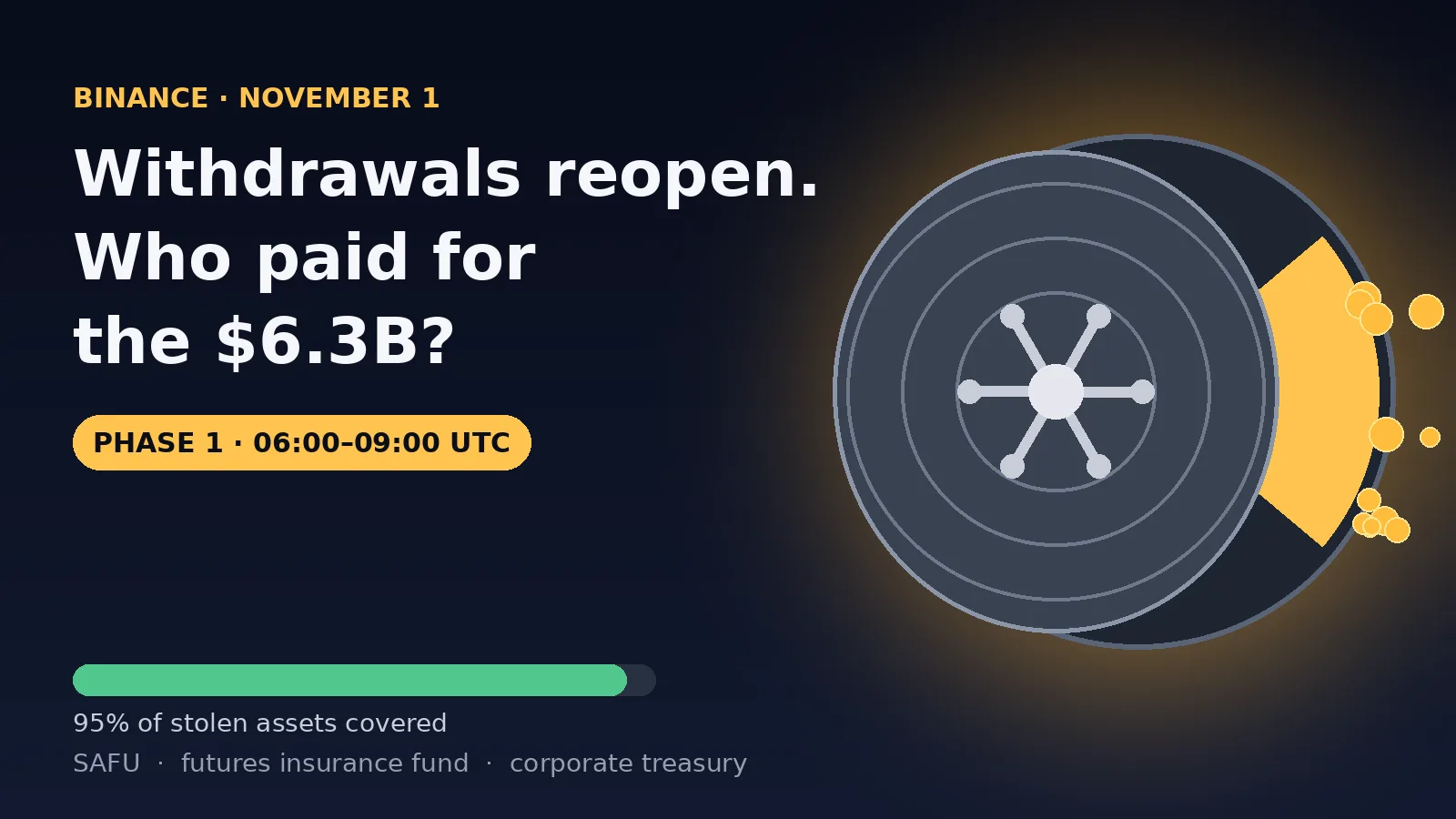
On October 28 the Fed held at 3.75–4%, but two of twelve voters wanted a hike right away (CNBC). Goldman Sachs, JPMorgan, Morgan Stanley, Citi and other big banks expect a quarter-point hike in December (Reuters). As of October 31, CME FedWatch put the odds of that move near 70%.
So a hike is mostly priced, not fully. A strong print on Friday settles the question; a weak one reopens the December debate. When money gets more expensive, leverage is the first thing to go, and crypto runs on more leverage than almost any market. That's why a US payrolls print hits bitcoin faster than any bill in Congress.
What to do with this week
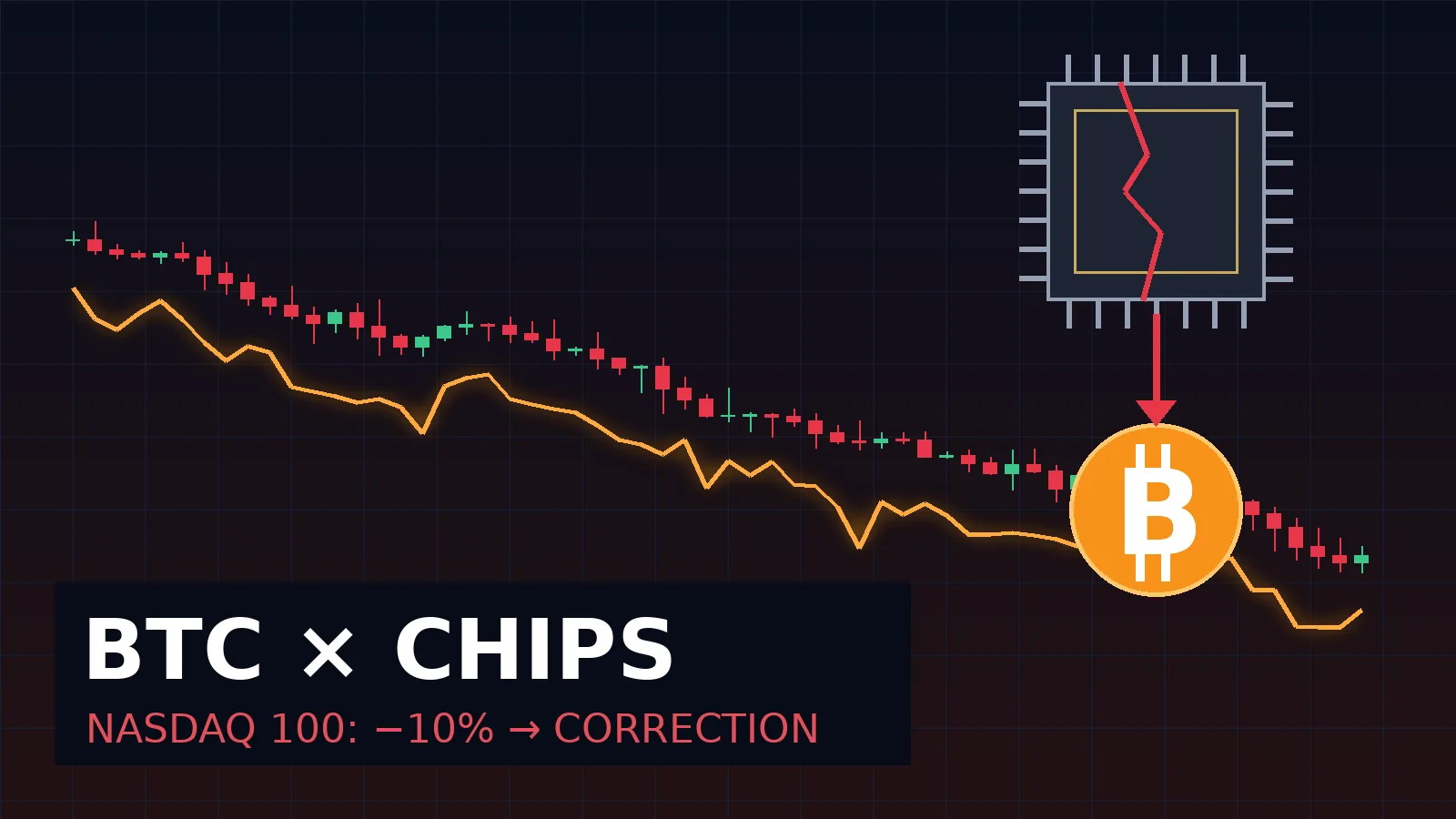
Bitcoin finished October down 7.3%, its weakest October since at least 2016. The record Binance hack, a hawkish Fed and a tech sell-off outweighed the seasonal track record (CryptoTicker). It now trades around $78,000, and the tape is jumpy.
Two times are worth writing down. Election results start landing overnight into Wednesday, and tight Senate races can take days to call. Expect moves on headlines, at night, when order books are thin. Payrolls drop on Friday at 13:30 GMT (Capital Street FX). In the first minutes after the release spreads widen, and a stop can fill well past its level.
Position size for moments like these gets decided beforehand. Once the number is out, the price has moved and so has your fill.
The vote changes the picture over two years. Friday's number can move price in ten minutes.
Daily market data on X: @tarvis_trade