Bitcoin breaks its July low. The cause isn't crypto
Bitcoin fell below $60,000 for the first time since July with almost no crypto news. Tech stocks, Treasury yields and forced liquidations did the damage.

Also in: Русский

Contents
Bitcoin just broke its July low. The cause isn't in crypto.
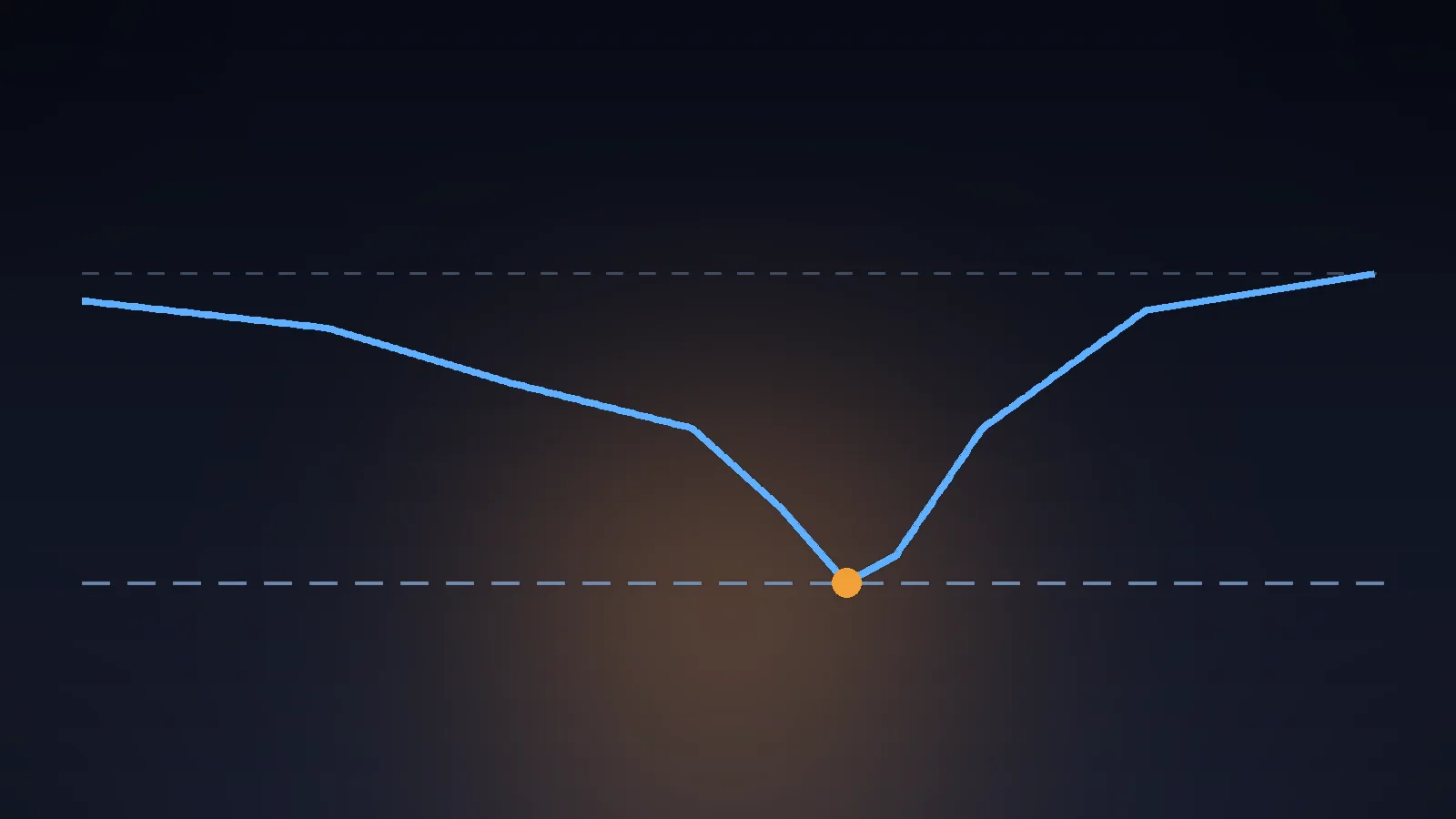
On Friday, November 20, bitcoin fell below $60,000 for the first time since early July. Intraday it touched $57,778 on Binance, under the July 1 low of $57,800. It bounced back to about $59,200 but still lost roughly 4% over the day (Coin Edition).
What's more interesting is why. There was almost no crypto news that day: no hack, no arrest, no regulator ruling. The reason sat in other markets.
Stocks fell first, and crypto followed
The Nasdaq lost nearly 4% on Friday. The semiconductor ETF SOXX dropped about 8%, its weakest level since April, per CoinDesk (EL7, citing CoinDesk). Reuters tied the selling to worries about whether the huge spending on AI infrastructure will pay off.
The order matters. Bitcoin didn't lead the market down. It moved with equities. If you only watch the BTC chart and crypto headlines on a day like this, you miss half of what's moving the price.
Why money goes to cash
The best line of the day didn't come from a crypto analyst. Maxim Sailer, co-founder and CEO of STS Digital, put it this way: "The haven is cash: two-year Treasuries yielding about 4.7%, or the Swiss franc" (EL7).
The logic is simple. Bitcoin pays no yield. When short-term US government debt pays about 4.7% a year with almost no risk, holding a volatile asset that earns nothing gets more expensive. That isn't a verdict on crypto. It's the price of forgone income, and everyone runs that math for themselves.
Add rates to the picture. According to CME fed funds futures, markets price about a 90% chance of a 25-basis-point Fed hike in December (Coin Edition). The next FOMC meeting is December 8–9. While a hike is priced in, cash feels safer than anything that pays nothing.
Liquidations: the number depends on who counts
Over 24 hours, the liquidation totals ran from $1.5 billion (CoinDesk) to $1.9 billion (CoinGlass). The gap comes down to which exchanges and products each aggregator includes. CoinGlass put about $1.73 billion on long positions, and only $736 million on BTC alone.
The mechanics matter more than the total. When price drops, exchanges close leveraged positions that no longer have enough collateral. Every forced close is a sale nobody chose to make by hand. The machine sells long positions into a market that's already falling, and that pushes the price down further. That's why a few percent of decline looks like a crash on a chart.
For a trader, the useful question isn't "where's the bottom?" It's "how much leverage do I have, and at what price does the exchange close me?" That answer is usually known in advance. It's just that nobody works it out on a quiet day.
What to watch next
Three things. First, the two-year Treasury yield: while it stays high, money has a real alternative. Second, outflows from US spot bitcoin ETFs: $582 million left on November 19, per EL7's data (EL7). Third, the mood in tech stocks: crypto is trading alongside them right now. If that link breaks, you'll see it in price before you read it in the news.
Daily market data on X: @tarvis_trade