The Fed says higher again: why rates hit bitcoin first
Fed minutes and Waller's hawkish comments sent bitcoin down almost 15% in a week. How rates work through the basis trade and ETF flows.

Also in: Русский

Bitcoin is down almost 15% in a week. On the morning of November 19 it traded at $63,039 (CoinGecko, via CryptoTicker). The news explanations are the usual list: ETF outflows, liquidations, the Anthropic IPO. All of those are real, but the biggest driver this week, in my view, is a Federal Reserve document.
On November 18 the Fed published the minutes of its October meeting. Almost all participants judged that further rate increases would likely be appropriate. Two of them said a move larger than 25 basis points could be worth considering in December if inflation data came in badly. The full text is on federalreserve.gov.
That same morning, Governor Christopher Waller told CNBC that a half-point hike in December might be needed, because inflation is "headed in the wrong direction, and it's spreading out". He said the Fed might need to "shock people" (CNBC).
The hike was priced in. The rate outlook was not.
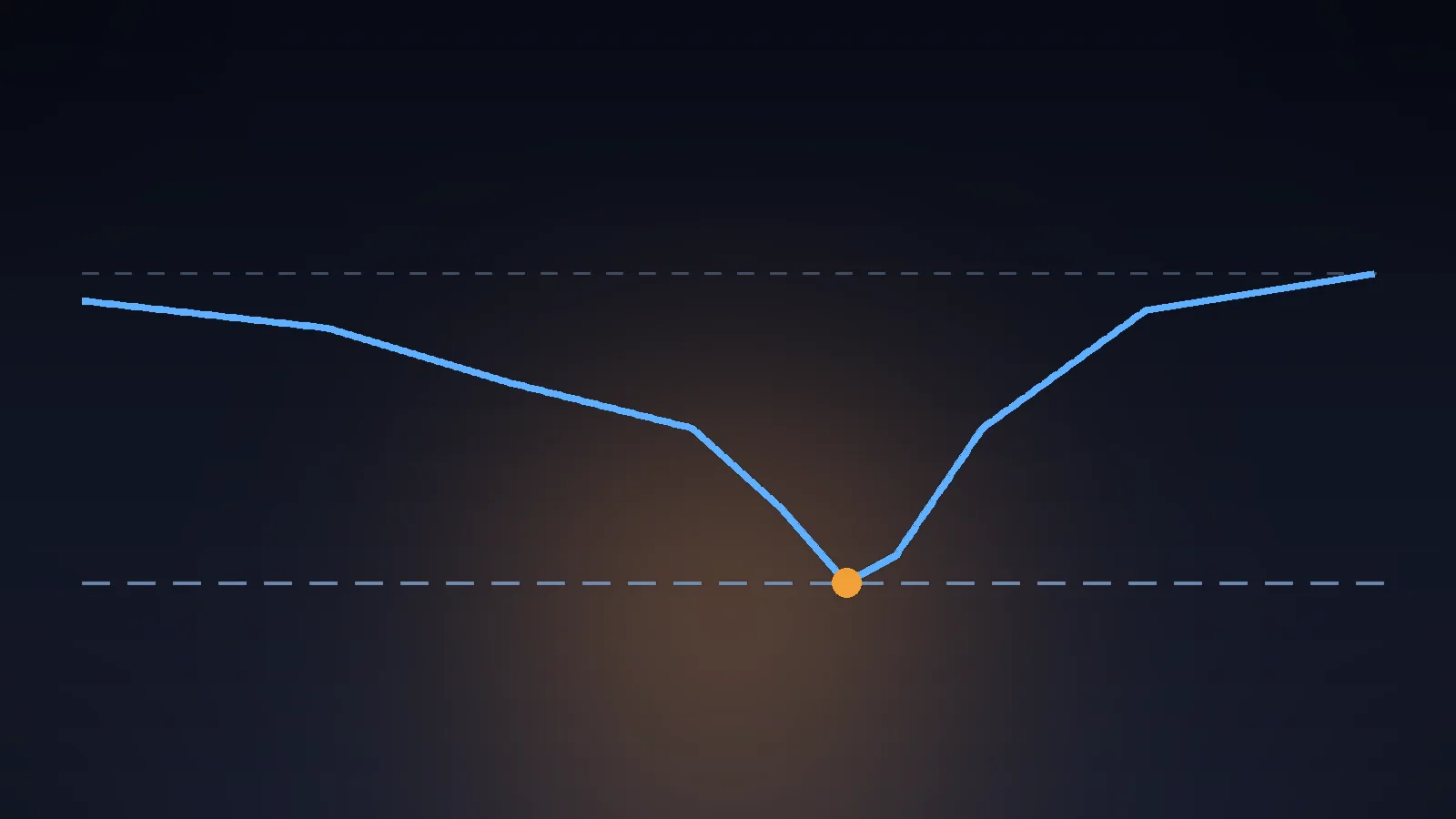
The fed funds rate sits at 3.75–4.00% (Markets Capital). Before the minutes, markets had priced a December hike almost in full. CME FedWatch put the odds somewhere between 90% and 96%, depending on the outlet. So "another hike is coming" was no surprise. What the minutes shifted was the path: the text suggested rates could stay high for longer, and that December could be bigger than a normal step. For crypto, that makes holding a risky asset more expensive.
The mechanism is simple, and easy to miss. One of the most popular trades in crypto is the basis trade: a fund buys BTC on spot and sells a perpetual future against it. The gap between the two prices, plus the funding rate, is the return. Funding is what longs pay shorts on a perpetual contract, and while it stays high, the trade pays. Talos says the return on this trade has fallen to 3–5% a year, about where US Treasuries are or below (CoinDesk). Why carry bitcoin's risk for the same yield you can get on a government bond? You don't. Funds close the trade, sell spot, and the money leaves.
ETFs show the same thing. On November 16, spot funds had their first inflow in eight sessions, $7.9 million. On November 17 they lost $239.9 million, and $209.5 million of that came out of BlackRock's IBIT (Farside via Yahoo Finance). Per SoSoValue, net outflows since the start of November reached about $2.6 billion.
Liquidations rose for a second straight day: on November 18, forced closures hit $377 million, up 34% from the day before (CoinDesk). The price drops first, and then leverage gets cleared out of whoever had the least room.
What a trader should do with this
When rates rise, they stop being background noise. Any bounce in this phase is worth one question: where is the money for it going to come from? Without ETF inflows and with a low basis yield, a bounce may just be a pause inside a downtrend.
I would not try to call the bottom. I watch three things: ETF flows, the cost of borrowed money on exchanges, and the macro calendar. The next Fed meeting is December 8–9, and inflation and jobs data come out before it. Those prints will show whether a half-point hike is a real scenario or just a strong line in a CNBC interview.
The market reacts not to the hike itself but to what it costs to keep a position open. The rate outlook was known for weeks, and the market still traded it like a surprise.
Daily market data on X: @tarvis_trade