Stablecoins Drain Faster Than 2022: $14.2B Gone in 30 Days
Aggregate stablecoin supply fell $14.2B in a month — the sharpest contraction since 2022. USDT and USDC shed $11B combined. What this means for liquidity and bitcoin.

Also in: Русский
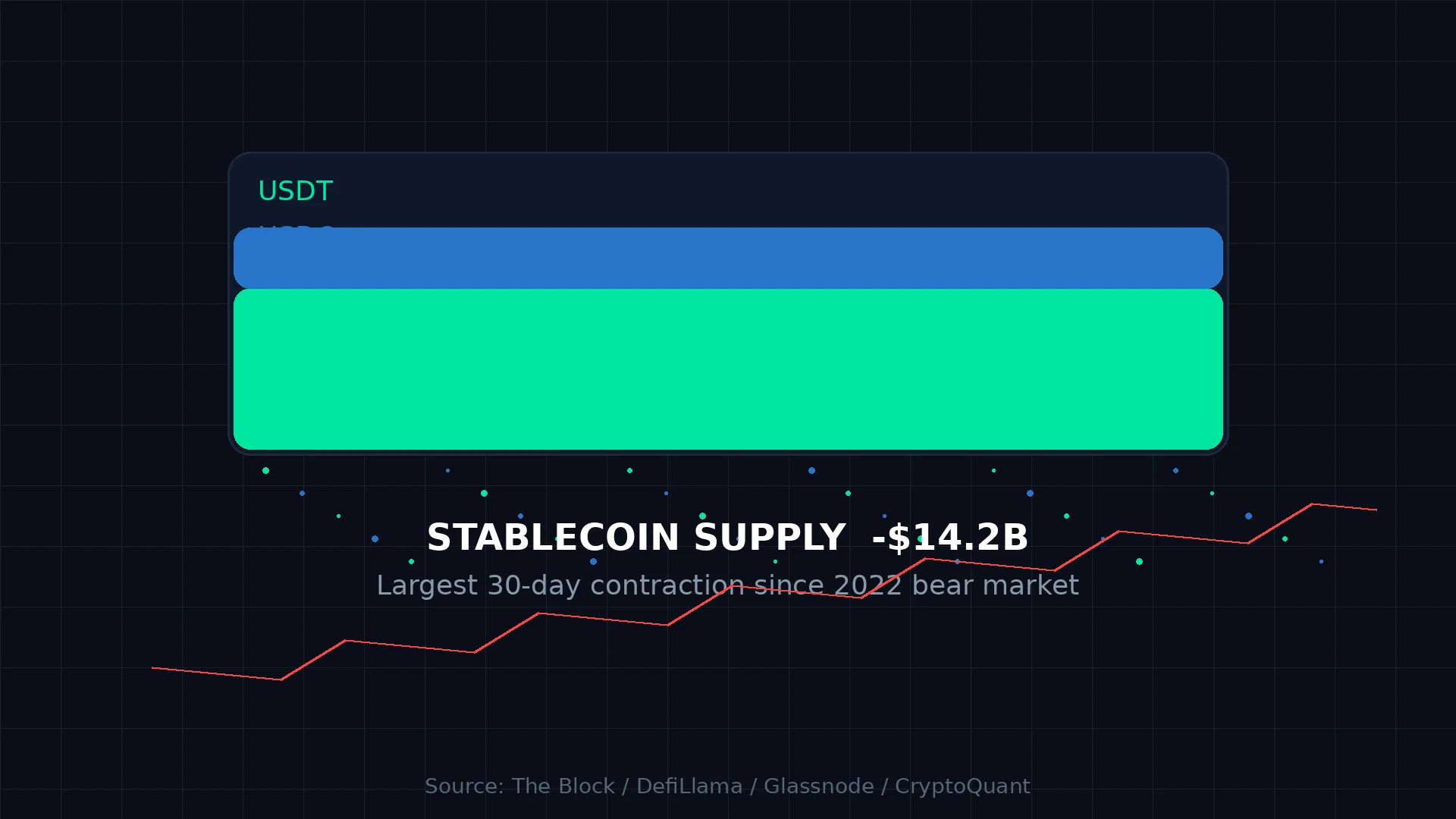
Stablecoins are leaving the market faster than in 2022. Over 30 days, aggregate supply dropped $14.2 billion — the sharpest contraction since Terra and FTX crashed the cycle. The Block and DefiLlama data, confirmed by Glassnode: "holders are redeeming stablecoins for dollars and taking cash out, leaving less fuel for a bounce."
USDT and USDC together shed nearly $11 billion. USDT's market cap fell $6.6 billion in the 60 days to Nov 7 — more than double the $3.2 billion drop over a similar period after FTX's collapse in December 2022. USDT now commands ~62.8% of stablecoin supply, USDC ~25.1%. Total pool sits just below $280 billion, last seen in September 2025.
For context: in June 2022, the 30-day decline neared $30 billion. Five months later, bitcoin printed its cycle low at $15.5K. Current pace is roughly half that, but the vector is identical — liquidity draining faster than new capital arrives.
What this means for traders Stablecoins are the market's dry powder. When supply expands, fresh capital enters, ready to buy crypto. When it contracts, capital exits to fiat, and the reverse flow takes months to rebuild.
Right now we're seeing classic bear-market mechanics: traders close positions, rotate into USDT/USDC, then withdraw to bank accounts. This isn't just "fear" — it's structural liquidity outflow.
Running in parallel:
- Spot bitcoin ETFs bled for a fourth straight session: $95M on Nov 11, $1.6B in November (SoSoValue). IBIT alone lost $1.73B over 8 sessions (Farside).
- Bitcoin broke below short-term holders' average cost basis (~$75.6K, CryptoQuant). Next key support: $68K.
- Fear & Greed Index: 28–30 (extreme fear).
The takeaway: dry powder is running out. Without fresh stablecoin issuance, every bounce gets sold. Watch USDT/USDC supply — until it turns back up, the primary trend stays down.
Daily market data on X: @tarvis_trade