Bitcoin at Two-Month Low: $1.28B ETF Outflows, $803M Liquidated in 4 Hours
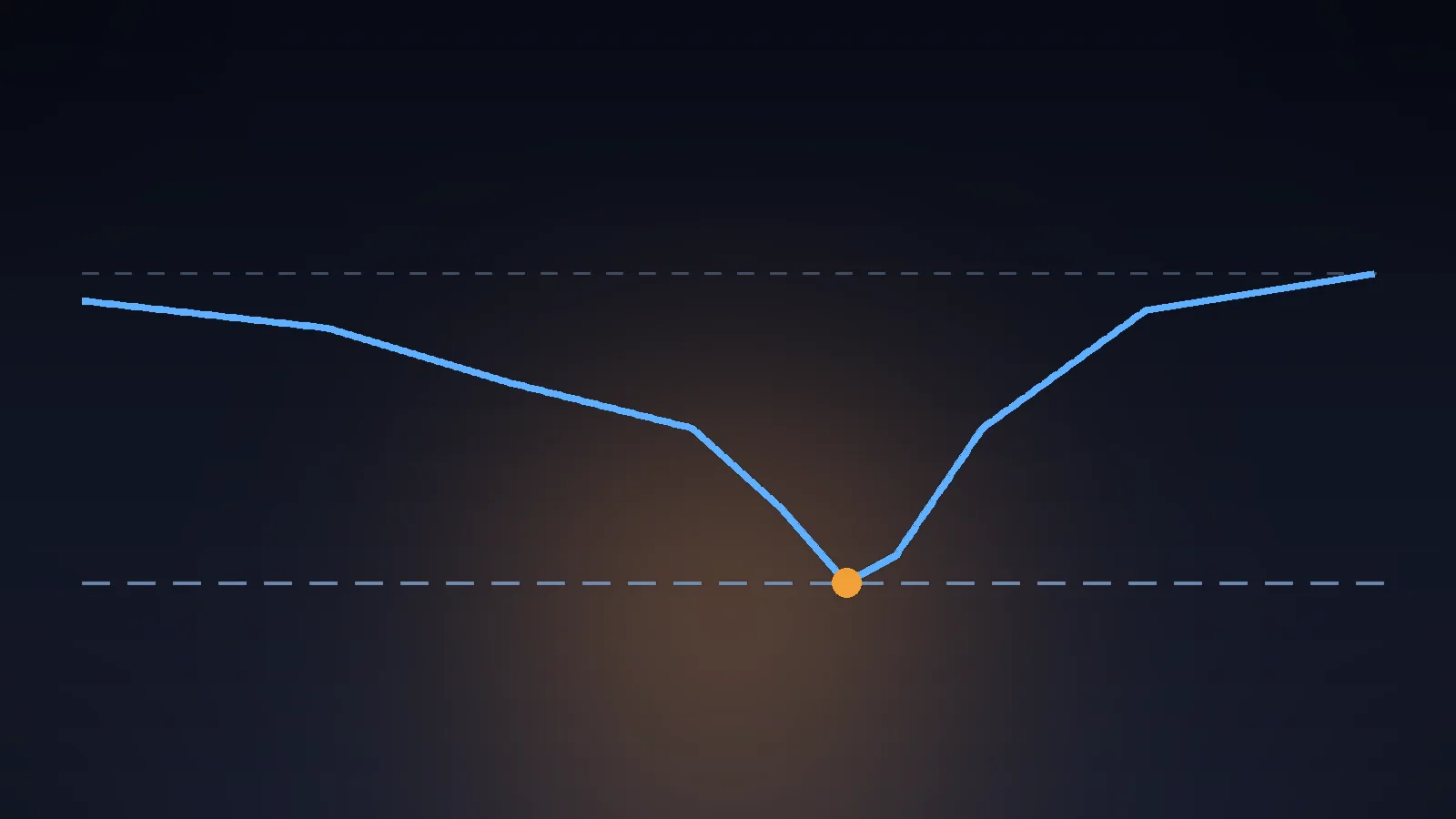
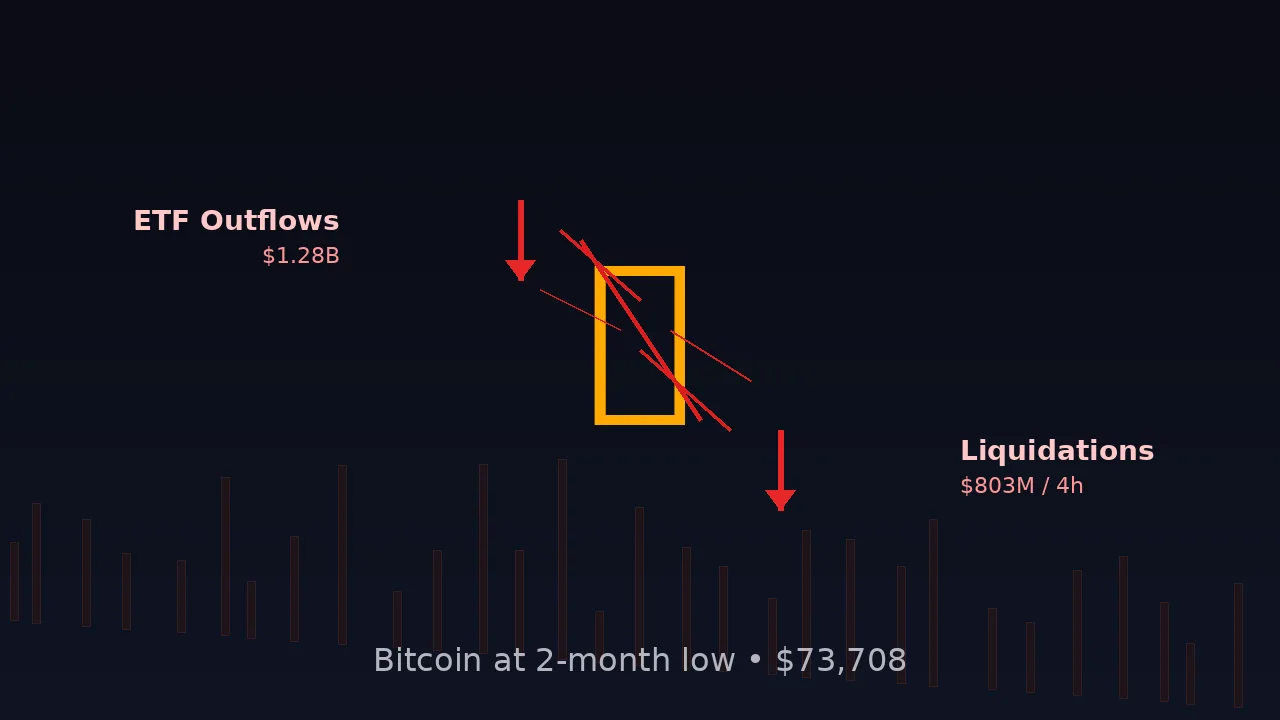
Bitcoin pierced $73,708 — lowest since August. $1.28B flowed out of ETFs in a week, $803M liquidated in 4 hours (90% longs), Binance stablecoin reserves down $9B. Breakdown of what's driving the market now.

Also in: Русский
Contents
ETFs: Institutions Are Leaving, Not Buying the Dip
In the week of November 2–6, US spot Bitcoin ETFs saw $1.28B in net outflows — the largest weekly exodus since June. Ether funds lost another $365M, per CoinPost. This wasn't a one-day scare: outflows ran for five consecutive sessions. Large players aren't stepping in to buy the dip; they're moving to cash or waiting for regulatory clarity after the US midterms.
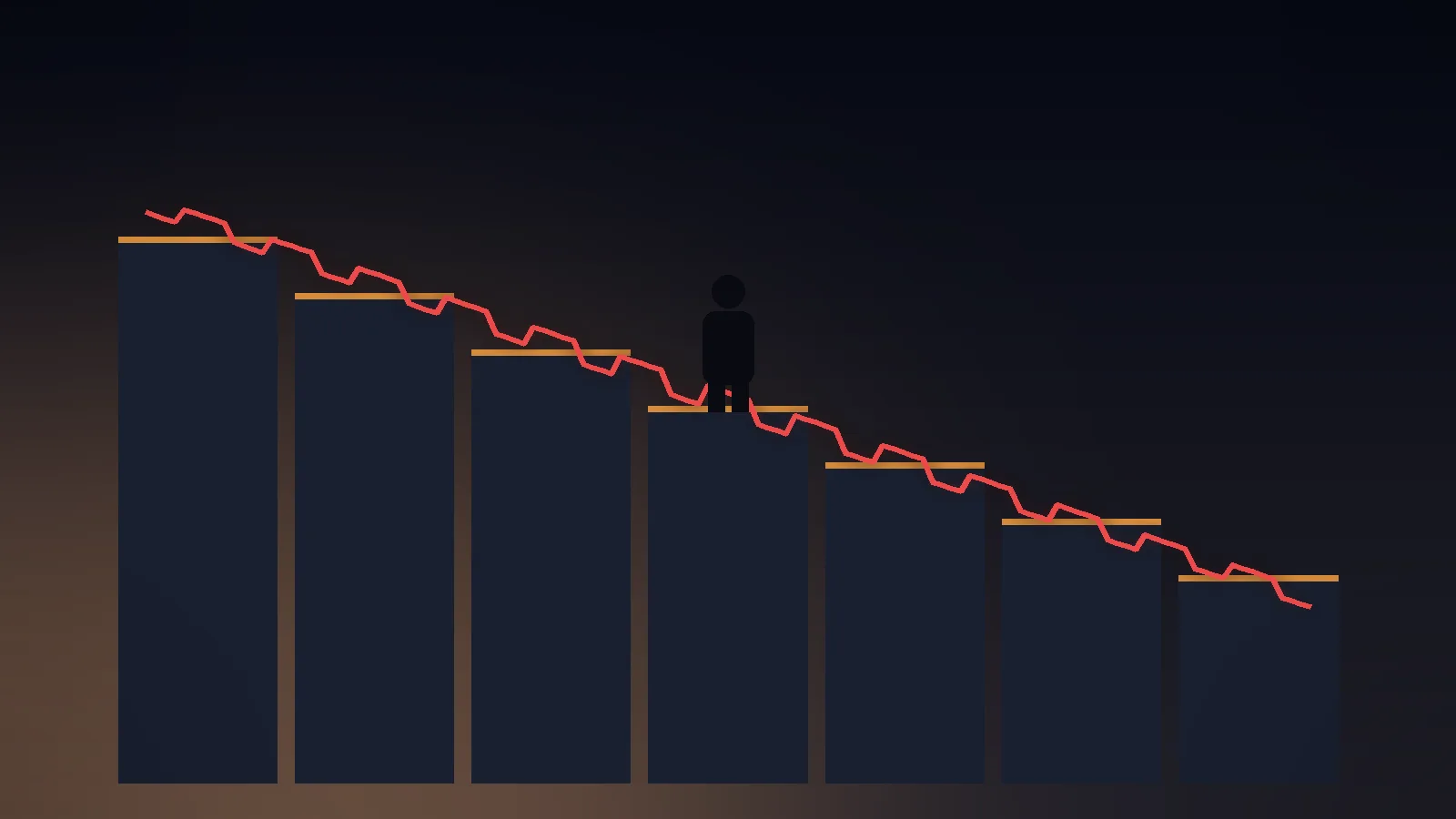
For a trader, the signal is clear: the institutional flow that powered Bitcoin to all-time highs this spring has reversed. Until ETFs show inflows again, rallies have no fuel tank.
Liquidations: $803M in 4 Hours, 90% Longs
Per Odaily and CoinGlass, the morning UTC session flushed $803M in positions. Of that, $744M were longs. Ether accounted for $358M, Bitcoin $233M. Textbook picture: crowd piles into longs near local highs, 10-50x leverage, stops clustered under round numbers ($76K, $75K, $74K). Market makers see that liquidity in the order book and push price straight to it.
Liqwall's heatmap shows another ~$200M in longs sitting below $73K. If that breaks, the next wagon goes faster.
Binance: $9B in Stablecoins Gone in a Week
The quietest, most worrying metric: Binance stablecoin reserves dropped from $41B to $32B in seven days (Odaily, on-chain data). USDT and USDC both down. This isn't just post-hack withdrawals from the October 29 breach — it's capital leaving the exchange for cold storage or fiat. Money isn't waiting for HYPE and other frozen assets to reopen withdrawals; it's voting with its feet.
Why We're Falling: Risk-Off from AI Stocks, Not Crypto News
Reuters and Korean outlets point to a single trigger: the US tech selloff. Investors are dumping risk everywhere — and Bitcoin's correlation with Nasdaq now exceeds its correlation with gold. A positive regulatory development (FinCEN and the Fed withdrew a proposal to lower the cross-border reporting threshold from $3,000 to $250) was ignored. When fear runs the portfolio, fundamentals take a back seat.
What This Means for a Trader
- Don't catch a falling knife on the broad market. ETF inflows are the first sign of a trend flip. Until they return, every bounce gets sold.
- Watch the liquidation map, not indicators. Stop clusters under $73K and $71K are real price magnets. Remora places limit orders exactly where someone else's stop sits — not "with the trend."
- CEX risk hasn't gone away. Binance has frozen HYPE withdrawals for 8 days. Mercado Bitcoin spent a week in read-only. Gopax halted trading over a single email threat. Your keys, your coins. On Hyperliquid, withdrawals can't be blocked — the trade-only key has no withdrawal permission.
- Fear & Greed at 28-31 (extreme fear). Historically these levels marked local bottoms — but only when ETF inflows returned. Without them, it's a break of lows.
Daily market data on X: @tarvis_trade