US Sanctions Eight Canadian Crypto On-Ramps — The New Front in the Fiat War
US Treasury sanctions 8 Canadian MSBs for laundering Iranian funds via crypto. Regulators are cutting fiat-crypto bridges, not exchanges — traders face tighter on/off-ramps.

Also in: Русский
US Sanctions Eight Canadian Crypto On-Ramps — The New Front in the Fiat War
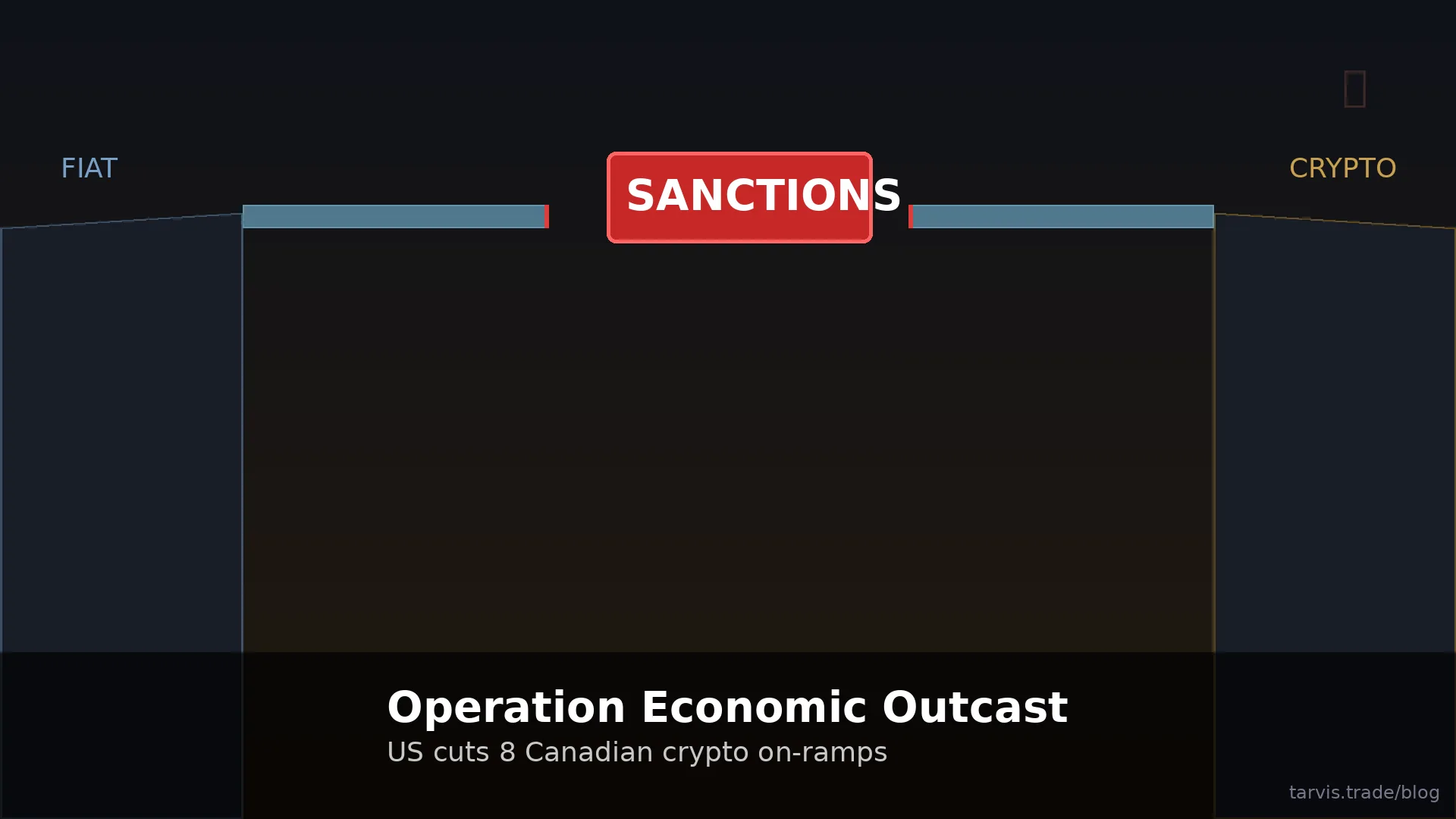
The US Treasury's OFAC and FinCEN designated eight Canadian money services businesses on November 6 under "Operation Economic Outcast." This isn't about exchanges or DeFi protocols. It's about the companies that physically convert Iranian rials into crypto and back. For traders, the signal is clear: regulators are learning to cut not the protocols, but the fiat on- and off-ramps.
What happened
OFAC added eight Ontario and British Columbia firms to the SDN list: Million Exchange, Amin Exchange (two linked entities), NIA Nations Currency, Farah Exchange, CCC Inc, B Galaxy Inc (operating as Cryptoyal), and Darvish Exchange. All are legally licensed Canadian MSBs — they passed KYC/AML, reported to FINTRAC, and still spent years piping funds for the IRGC (Islamic Revolutionary Guard Corps) and drug cartels.
Treasury data shows these MSB addresses sent hundreds of thousands of dollars to wallets linked to the IRGC and to sanctioned Iranian exchanges — Nobitex, Wallex, Ramzinex, Bitpin, Shelbit, Aban Tether. Part of the flow moved through wallets tied to Ryan Wedding, the former Olympic snowboarder the FBI accuses of running an international cocaine network. Wedding used the same channels to launder drug proceeds into bitcoin and USDT.
The action was coordinated with Canada's FINTRAC. Standard SDN consequences apply: all US-jurisdiction assets frozen, any transactions with these persons prohibited for US persons and through the US financial system. In practice, these on-ramps are cut off from the dollar.
Why this matters for traders
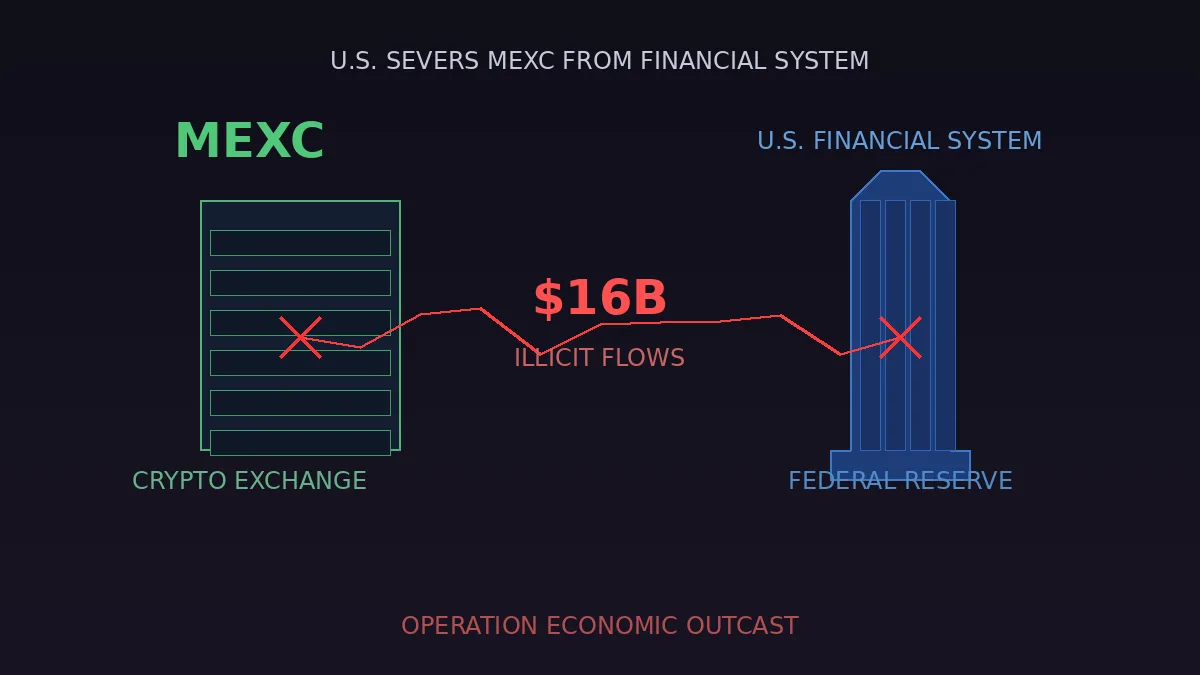
Until recently, the US went after exchanges (BTC-e, BitMEX, KuCoin, now MEXC) and mixers (Tornado Cash, Sinbad). The new vector is fiat bridges. MSBs are legal, registered, reporting entities. They didn't hide on Tor. They had offices in Toronto and Vancouver, FINTRAC licenses, compliance officers. And they still became sanctions-evasion infrastructure.
The signal to the market: regulators realized on-chain surveillance is useless without controlling the off-ramps. Any legal fiat↔crypto bridge in any jurisdiction is now in the crosshairs if "dirty" flow passes through it. For traders, this means two things:
- Buying and selling crypto for fiat gets harder and slower. Banks and payment processors will tighten counterparty screening. Smaller OTC desks and P2P platforms face extra checks, payout delays, source-of-funds requests. Spreads on fiat pairs will widen.
- Stablecoins are the next logical target. If MSBs get cut for converting rials into USDT/USDC, issuers (Tether, Circle) will be forced to proactively blacklist addresses, not just react to requests. We already saw $1.5B USDT and $800M USDC frozen after the Binance hack. This becomes routine.
What's next
Operation Economic Outcast launched in August 2026. Its stated goal: sever Iran's financial lifelines, including the crypto channel. These eight Canadian MSBs are just the first package. Treasury says explicitly: "we will continue cutting off revenue the regime uses to fund terrorism, weapons proliferation, and proxies across the Middle East."
Canada hasn't announced mirror sanctions against its own firms, but FINTRAC participated in the investigation. Administrative fines or license revocations will likely follow — otherwise Canada risks secondary US sanctions.
The practical takeaway for traders: diversify your fiat on- and off-ramps now. Don't keep all eggs in one OTC desk or one banking corridor. Screen counterparties against sanctions lists yourself (OFAC SDN, UK HMT, EU CFSP, UN) — banks will start doing it for you, but with a delay and with your funds frozen during review.
Daily market data on X: @tarvis_trade